

Reserve your copy of the latest addition to the library of baseball literature.
by Stew Sallo, author of “The Deadhead Cyclist.”
Life lessons on two wheels to the tunes of the
Grateful Dead
Robert Hall Weir, né Parber,
October 16, 1947 – January 10, 2026
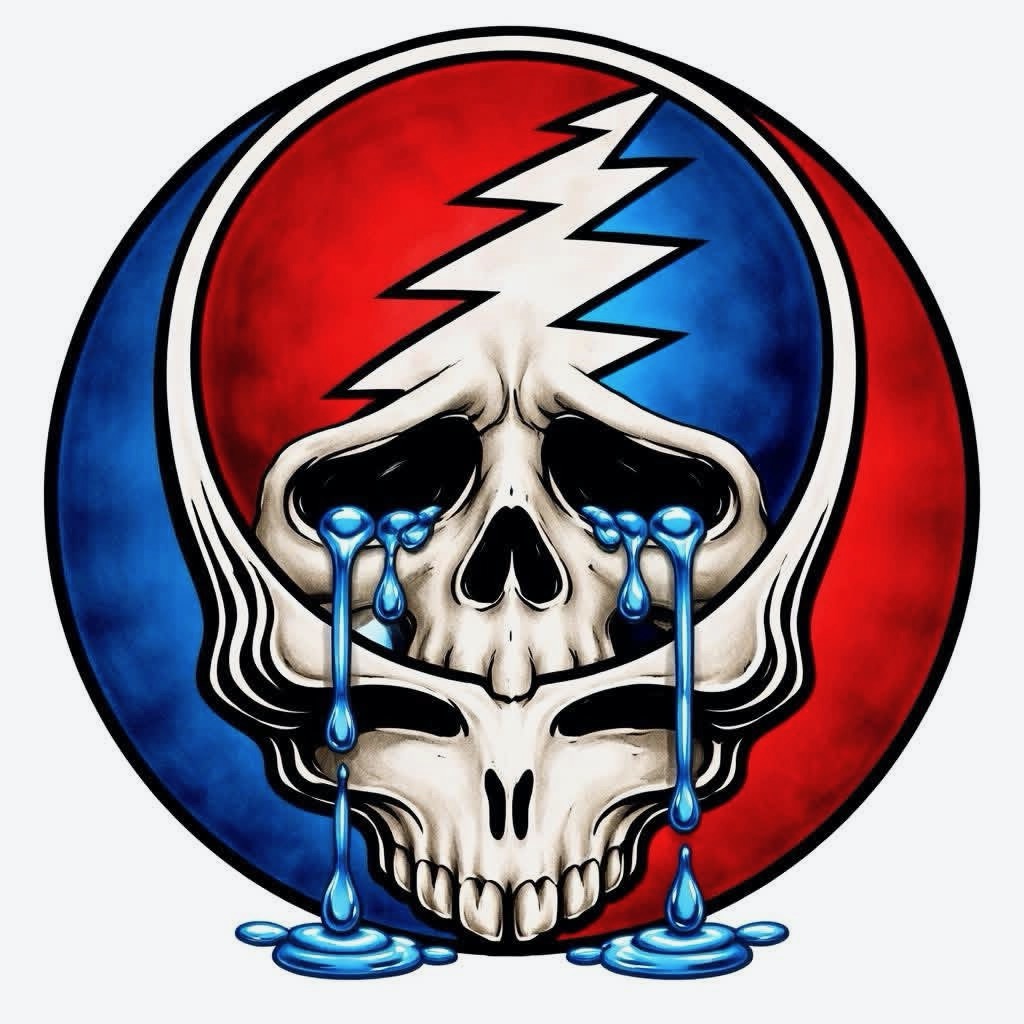
Let the words be yours, I’m done with mine.
I first saw Bob Weir on October 19, 1974 with the Grateful Dead at Winterland Ballroom in San Francisco. I last saw Bob Weir on June 14, 2024 as a member of Dead & Company at The Sphere in Las Vegas. Over the course of almost 50 years, it was my privilege to see Bobby perform countless times as a member of the Grateful Dead, Kingfish, Ratdog, the Other Ones, The Dead, Furthur, Dead & Company, the Weir Robinson & Greene Acoustic Trio, and probably others that I have failed to remember.
Other Posts
This Week in Grateful Dead History: Week 17 - April 23, 1977
Without love in the dream
Ask any Deadhead what period represents the apex of the band’s touring career and the Spring, 1977 tour will inevitably be cited. Much like references to the “seventh member” of the six-piece band being present during a particularly outstanding show, there was a seventh member quality to the magic of the 30 shows the Grateful Dead played in the spring of 1977.
This Week in Grateful Dead History: Week 51 – December 15, 1986
We will survive
The irony is inescapable. The very song that became nothing less than an anthem for the entire Grateful Dead community also represented the beginning of the end for the band. Touch of Grey reached #9 on the Billboard “Hot 100” chart in September, 1987, the only time the Dead cracked the top 10 in the entire history of the band. A distant second, Truckin’ reached #64 in December, 1971, and only 4 other songs ever ranked in the top 100.
This Week in Grateful Dead History: Week 19 - May 8, 1977
Take a step back
Accepting the premise that Spring ’77 was the apex of the Grateful Dead’s history, which one of the 30 shows the band performed during that period was the climax of the tour? The third week of the tour – which included stops in Boston, Ithaca, Buffalo, St. Paul, and Chicago – may provide the answer, although choosing any one of these shows as the Dead’s best show of all time may be as futile an endeavor as trying to choose the most beautiful national park, the best full-suspension mountain bike, or the greatest athlete ever.
All Material Copyright 2020, 2021, 2022 and 2023 by Stewart Sallo